
The release of qwen quietly rewrote the rules of AI image editing. Instead of treating images as flat pixels, Qwen introduced a workflow built around real, controllable layers — closer to professional tools like Photoshop than traditional generative editors.
For creators, designers, and product teams, this shift changes what “AI image editing” actually means.
What Makes Qwen Different From Traditional AI Image Editors
Most AI image tools operate destructively. You prompt, the model redraws, and your previous structure is gone. qwen breaks from that approach by introducing true layer-aware image editing.
Key difference:
- ❌ Old approach: one prompt → one flattened image
- ✅ Qwen approach: multiple editable layers with independent control
This means users can adjust elements without re-generating the entire image — a foundational change in how AI-assisted design works.
Qwen’s Layer-Based Image Editing Explained
Real Layers, Not Visual Illusions
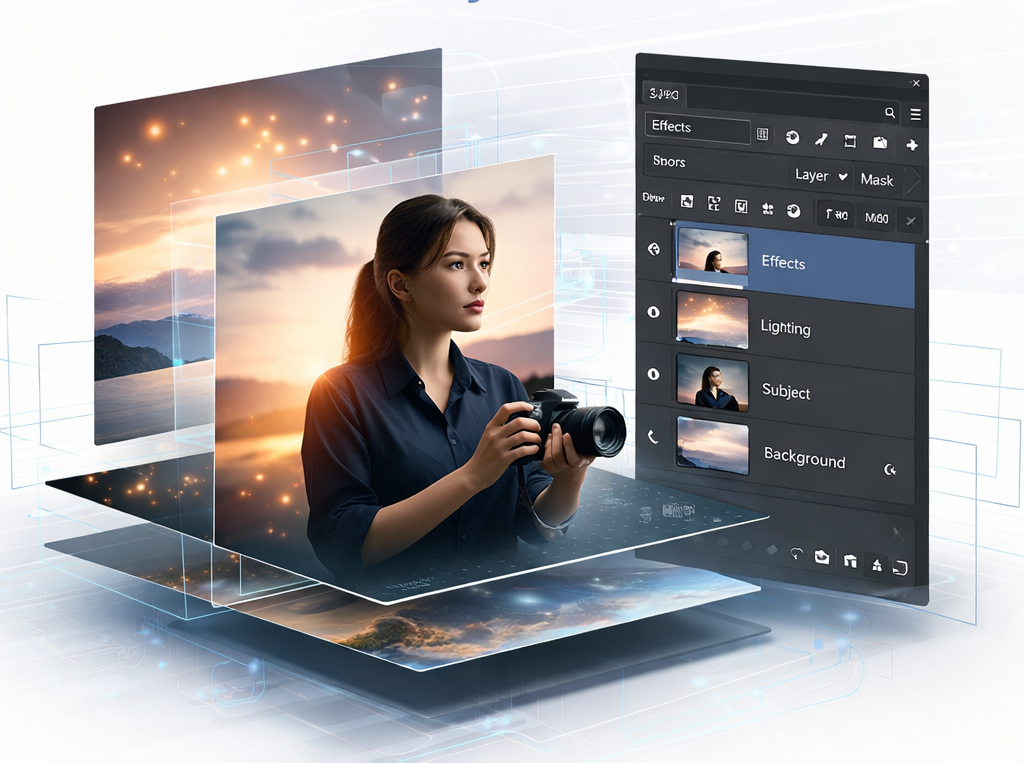
Unlike mask-based tricks, qwen treats objects, backgrounds, lighting, and effects as separate, editable layers. Each layer can be:
- Modified independently
- Repositioned or refined
- Re-prompted without affecting other elements
This mirrors how professional designers already work — but removes hours of manual effort.
Photoshop-Like Control, Powered by AI
With qwen, users can:
- Replace objects without breaking composition
- Adjust lighting or shadows independently
- Refine textures without touching color grading
The result is an AI system that behaves less like a generator and more like a creative workspace.
Why Qwen Changed the Rules of AI Image Editing
1. Non-Destructive Editing at Scale
For the first time, AI-generated images can be iterated without starting over. This is critical for:
- Brand consistency
- Campaign localization
- Product photography workflows
2. Creative Control Moves Back to Humans
Traditional AI tools prioritize speed over control. qwen flips that dynamic, giving creators precision without sacrificing automation.
3. A New Standard for Professional Use
Layer-based editing makes qwen viable for:
- Marketing teams
- Designers
- Creative agencies
- Product & e-commerce visuals
This is no longer “AI art.” It’s AI-assisted production.
The Technology Behind Qwen’s Image Editing Breakthrough
Developed by Alibaba, Qwen is a multimodal model designed to understand structure, not just pixels.
Its image system combines:
- Multimodal reasoning
- Spatial understanding
- Object permanence across edits
That’s why qwen can preserve relationships between layers even after multiple changes — something earlier models struggled with.
How Qwen Compares to Other AI Image Tools
|
Feature |
Traditional AI Editors |
Qwen |
|
Layer control |
No |
Yes |
|
Non-destructive edits |
No |
Yes |
|
Iterative refinement |
Limited |
Full |
|
Professional workflows |
Weak |
Strong |
This gap explains why qwen is increasingly referenced in US-based AI and creative technology coverage.
Try the Qwen Image Editing Tool
Qwen’s image editing capabilities are publicly accessible through its official platform, where users can experiment with layer-aware AI image generation and editing directly.
This hands-on access is a key reason qwen adoption is accelerating among professional users.
What Qwen Signals for the Future of AI Creativity
The success of qwen suggests a broader shift:
- AI tools will move from “generate” to collaborate
- Creative control will matter more than raw output
- Layered, modular design will become the norm
For AI image editing, Qwen didn’t just add a feature — it changed the mental model.
Explore more in-depth AI analysis, case studies, and strategic insights on how artificial intelligence is reshaping creative workflows and modern business in our AI section at Plus Reference.