

Topline
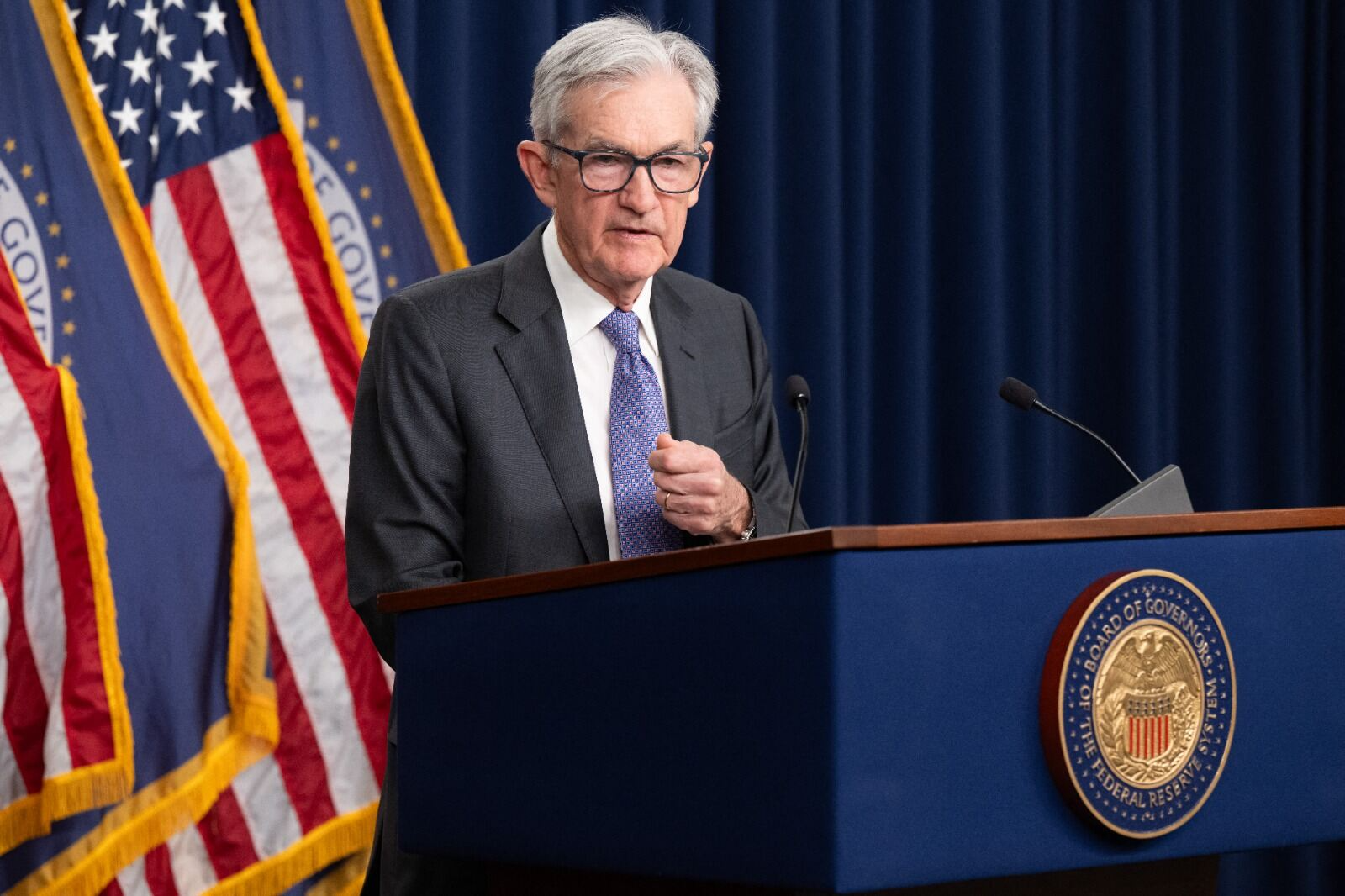
U.S. Justice Department officials have opened a criminal investigation into Jerome Powell, a move the Federal Reserve chair described as an “unprecedented action” that raises serious questions about political pressure on the central bank and the future of its independence.
In a rare and direct public response, Powell said the investigation should be viewed in the broader context of sustained attacks and threats from the Trump administration, marking a sharp escalation in the long-running conflict between the White House and the Federal Reserve.
Powell Responds to DOJ Investigation
In a video statement released Sunday night, Powell confirmed that the Justice Department has issued grand jury subpoenas related to his testimony before the Senate Banking Committee last year. The investigation centers on statements Powell made regarding the $2.5 billion renovation of the Federal Reserve’s Washington headquarters.
While emphasizing his respect for the rule of law, Powell warned that the criminal probe cannot be viewed in isolation.
“This unprecedented action should be seen in the broader context of the administration’s threats and ongoing pressure,” Powell said.
He added that the threat of criminal charges stems not from wrongdoing, but from the Federal Reserve’s refusal to align monetary policy with political demands.
A Deepening Rift With the White House
The investigation comes amid intensifying criticism from Donald Trump, who has repeatedly attacked Powell over the central bank’s decision not to aggressively cut interest rates. Trump has also cited the cost of the Federal Reserve renovation as a potential justification for removing the Fed chair.
According to Powell, the situation goes beyond a dispute over building costs or congressional testimony. Instead, he framed the issue as a test of whether the central bank can continue setting interest rates based on economic data — or whether monetary policy will become subject to political intimidation.
“The issue is whether the Fed will be able to continue to set interest rates based on evidence and economic conditions,” Powell said, “or whether instead, monetary policy will be directed by political pressure.”
What the Investigation Involves
Reporting cited by Forbes and other outlets indicates that the investigation was initiated by the U.S. Attorney’s Office for the District of Columbia. That office is currently led by Jeanine Pirro, who was appointed to the role last year.
According to available information, prosecutors have contacted Powell’s staff multiple times seeking documents related to the renovation project and the Fed chair’s prior testimony. While no charges have been filed, the issuance of subpoenas signals that the matter has moved beyond a preliminary review.
The Justice Department has not publicly detailed the scope of the probe, and Powell has not been accused of any crime.
Trump Denies Knowledge, Reignites Criticism
Asked about the investigation during an interview with NBC News, Trump denied direct knowledge of the probe but renewed his criticism of Powell’s leadership.
“I don’t know anything about it,” Trump said, before adding that Powell “isn’t very good at the Fed, and he’s not very good at building buildings.”
The remarks further underscored the political backdrop surrounding the investigation, reinforcing Powell’s claim that the probe reflects a broader pattern of pressure on the Federal Reserve.
Lawmakers Push Back
Reaction from Capitol Hill was swift and bipartisan. Lawmakers from both parties warned that a criminal investigation into the Fed chair could undermine confidence in both the central bank and the Justice Department.
Sen. Thom Tillis, a Republican member of the Senate Banking Committee, said the probe raises serious concerns about the erosion of Federal Reserve independence. He warned that the credibility of the Justice Department itself is now at stake and pledged to block future Federal Reserve nominations until the issue is resolved.
Democratic Sen. Elizabeth Warren echoed those concerns, accusing Trump of attempting to exert control over the central bank by sidelining Powell and reshaping Fed leadership.
The unusual alignment between critics on both sides of the aisle highlights how sensitive the issue of central bank independence remains in Washington.
Why Powell’s Response Matters
In closing his statement, Powell struck a defiant but measured tone, emphasizing his commitment to public service and the Federal Reserve’s mandate.
“I have carried out my duties without political fear or favor,” Powell said. “Public service sometimes requires standing firm in the face of threats.”
For investors, policymakers, and global markets, the situation represents more than a legal dispute. It raises fundamental questions about whether the Federal Reserve can continue to operate free from political interference — a cornerstone of U.S. economic credibility.
A Developing Story With Broader Implications
The criminal probe into Powell marks one of the most consequential confrontations between the executive branch and the Federal Reserve in modern history. While the investigation remains ongoing, its existence alone has already triggered alarm across financial and political institutions.
As this story continues to develop, its outcome could shape not only Powell’s tenure, but also the future relationship between monetary policy and political power in the United States.
Explore more coverage:
This article is part of Plus Reference’s Business coverage. You can follow all our Business news and institutional analysis through the Business section.
External reference:
Background and reporting context aligned with coverage published by Forbes.