
How We Evaluated the Best Keyword Research Tools
Most articles ranking for “best keyword research tools” read the same.
Affiliate-heavy lists, shallow comparisons, and little insight into how these tools actually fit into a real team workflow.
So instead of repeating specs, we looked at keyword tools from a practical, execution-first perspective.
To keep the comparison grounded, we tested each tool using the same real-world topic: “best keyword research tools.”
It’s a competitive, fast-evolving term that reflects how modern teams research, validate, and prioritize topics.
Each of the best keyword research tools was evaluated on three criteria:
- Usability — how quickly a team can extract value
- Insight quality — signal over noise
- Actionability — whether the data helps real content and planning decisions
Good keyword tools don’t overwhelm teams with metrics.
They surface the few signals that actually influence visibility, demand, and opportunity.
1. WordStream
Best for: Fast keyword ideation and competitive snapshots without friction
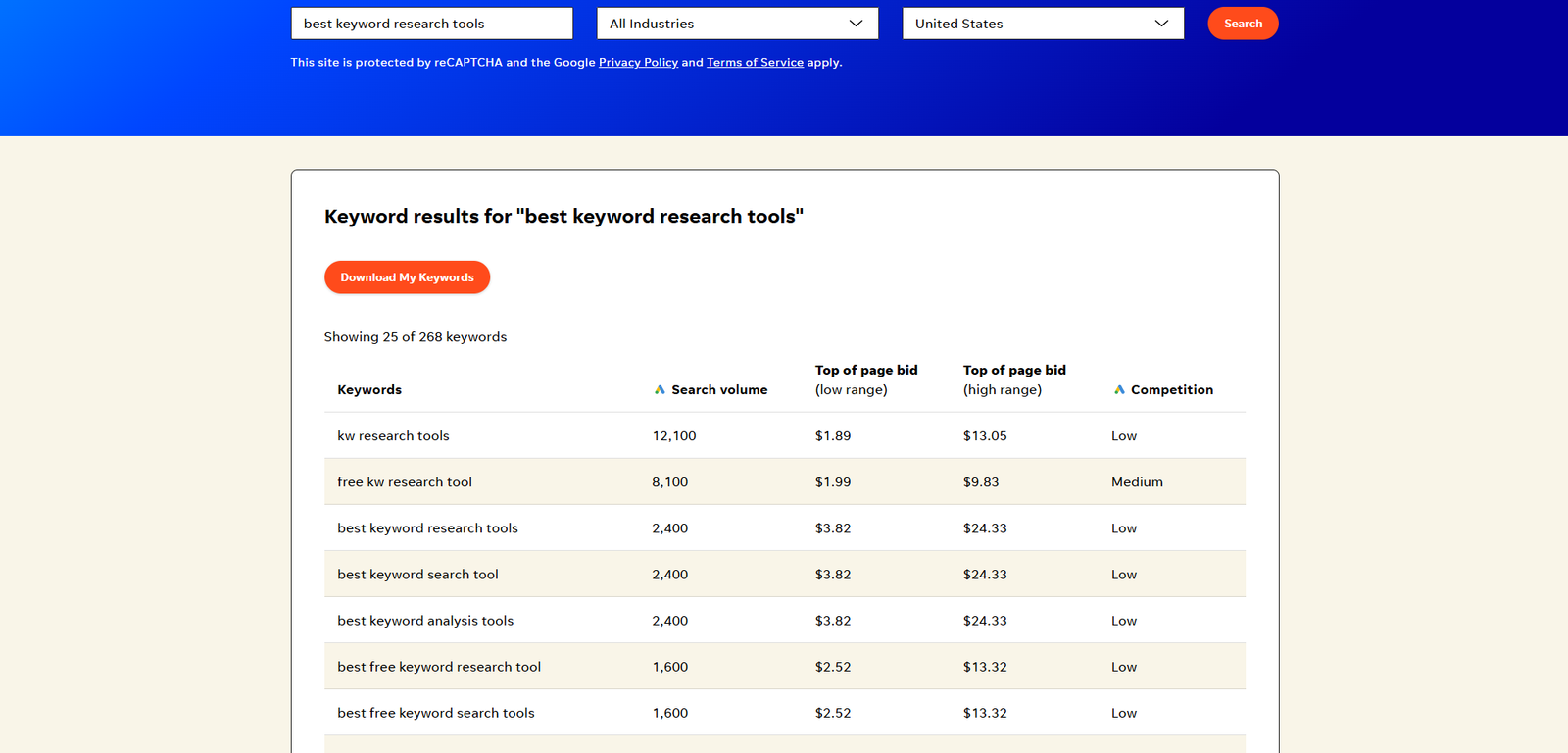
WordStream is designed for speed. It gives teams a quick sense of whether a keyword is worth further exploration — no setup, no learning curve.
What it does well
- Generates large keyword sets from a single seed
- Displays estimated search volume, competition, and CPC
- Supports industry and U.S. location filtering
- Allows quick export for early-stage planning
Why it matters
For early brainstorming or validating topic direction, WordStream removes friction. It’s particularly useful at the top of the research process, before deeper analysis begins elsewhere.
2. Semrush
Best for: Structured keyword validation with competitive context
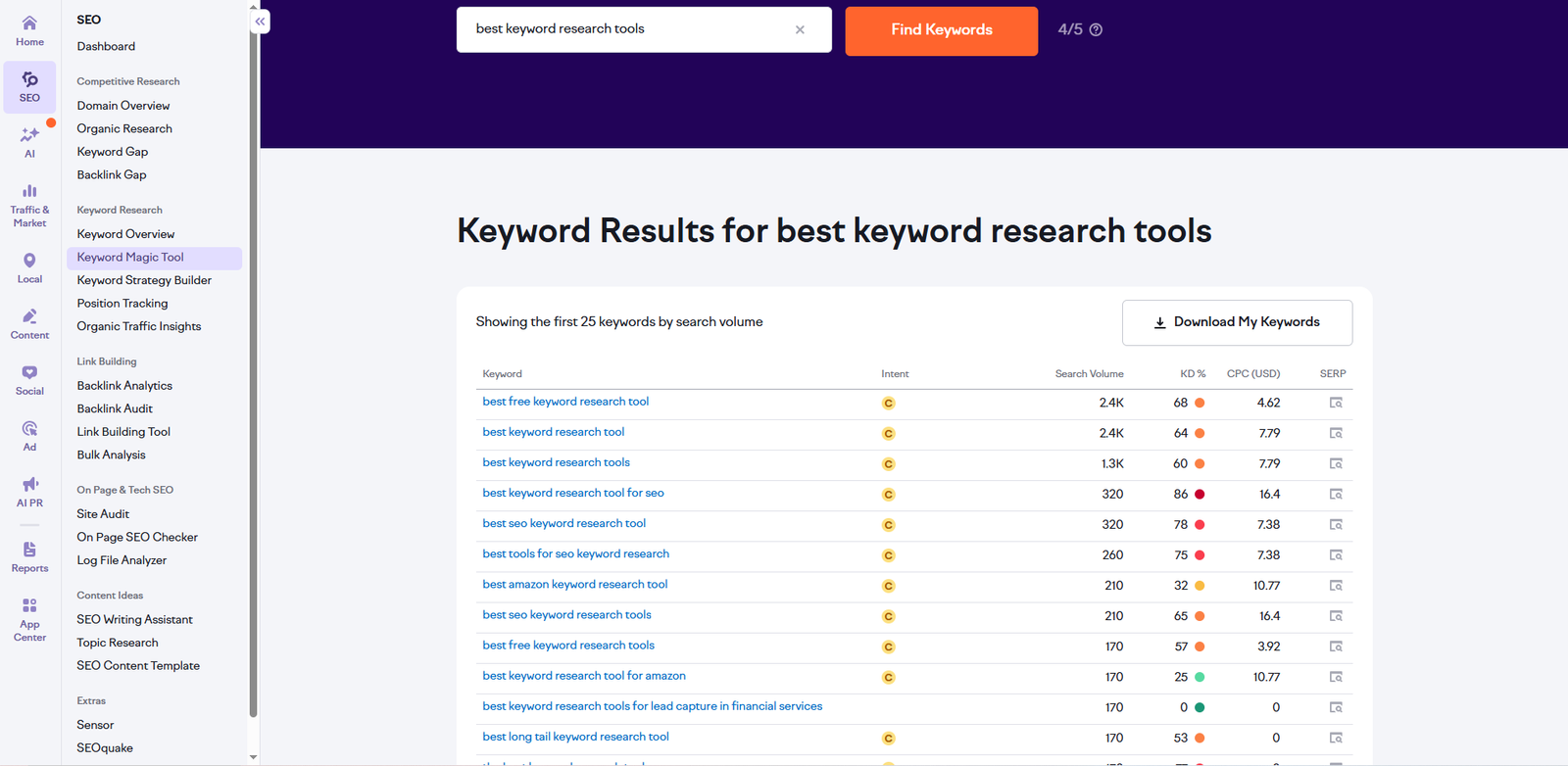
Semrush’s free keyword view offers a compact but meaningful snapshot of search demand and competition — especially valuable for U.S.-focused teams.
What it does well
- Shows search volume, keyword difficulty, CPC, and intent
- Ranks top keyword variations by volume
- Integrates directly with the Keyword Magic Tool
Why it matters
Semrush excels at helping teams decide whether a topic deserves resources. It’s often used as a gatekeeper tool — validating ideas before they turn into content initiatives or campaigns.
3. Ryan Robinson Keyword Tool
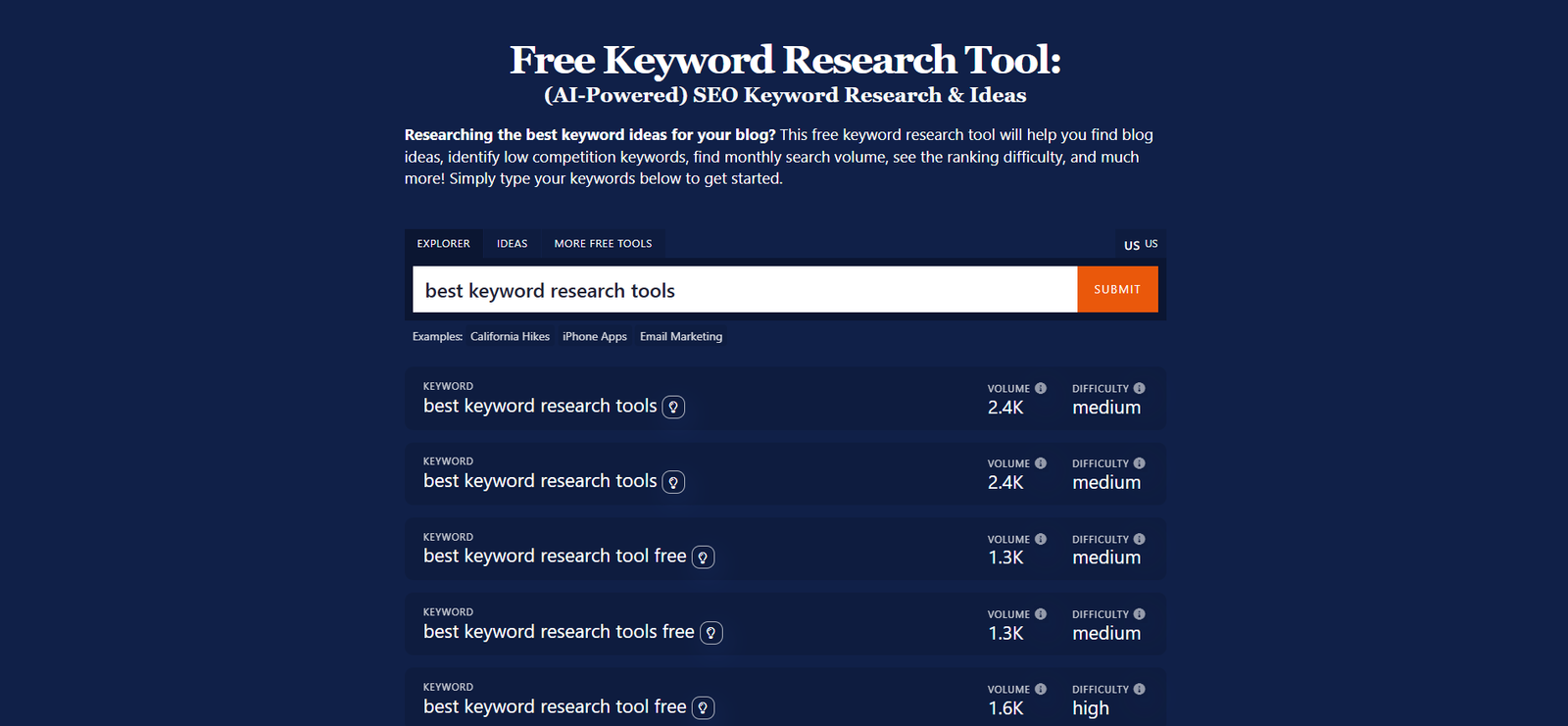
Best for: Natural-language keyword discovery and long-tail expansion
This lightweight browser-based tool mirrors how people actually search — especially useful for uncovering conversational and question-based queries.
What it does well
- Pulls suggestions directly from Google Autocomplete
- Surfaces long-tail keyword variations instantly
- Requires no account or setup
Why it matters
For content teams building topic clusters or exploring audience language, this tool reveals how search intent is phrased — not just what’s searched.
4. Ahrefs
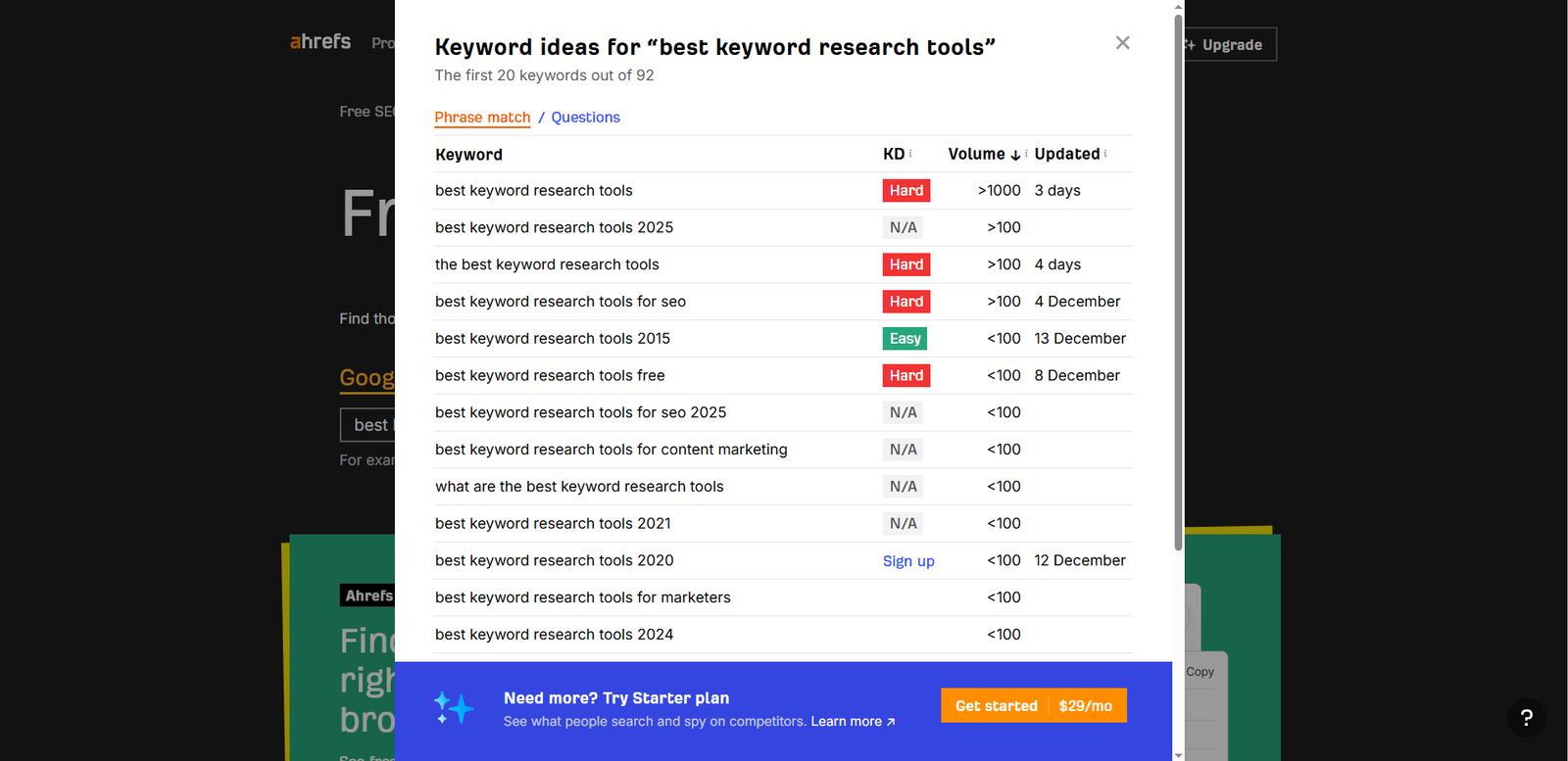
Best for: High-quality keyword validation with minimal noise
Ahrefs limits output — and that’s the point. The data you get is refined, reliable, and immediately useful.
What it does well
- Provides search volume and keyword difficulty
- Highlights question-based queries
- Supports multiple search engines
- No sign-in required
Why it matters
Ahrefs helps teams avoid chasing weak opportunities. Its question-based insights are especially valuable for modern content strategies where intent and context matter more than raw volume.
Final Perspective
There is no single “best keyword research tools” — only tools that fit different stages of decision-making.
High-performing teams don’t rely on one platform.
They combine speed, validation, intent analysis, and competitive insight to guide smarter content and marketing decisions.
In a crowded search environment, the real advantage isn’t more data —
it’s knowing which signals deserve attention.
Stay Updated on Marketing Tools
Tools change fast — and outdated recommendations don’t help anyone.
That’s why we continuously update our Tools section with relevant changes, meaningful updates, and platforms that actually deliver value.
If tools are part of your marketing workflow, explore the Tools category to stay aligned with what works today — not last year.