


Topline
Alphabet briefly reached a $4 trillion market valuation during trading, marking a major milestone for the Google parent as growing confidence in its artificial intelligence strategy reshaped investor sentiment and pushed the company back to the center of Big Tech competition.
The move reflects a broader reassessment of Alphabet’s long-term positioning, driven by rapid progress in AI models, cloud infrastructure, and strategic partnerships that have helped dispel concerns the company was falling behind rivals in the AI race.
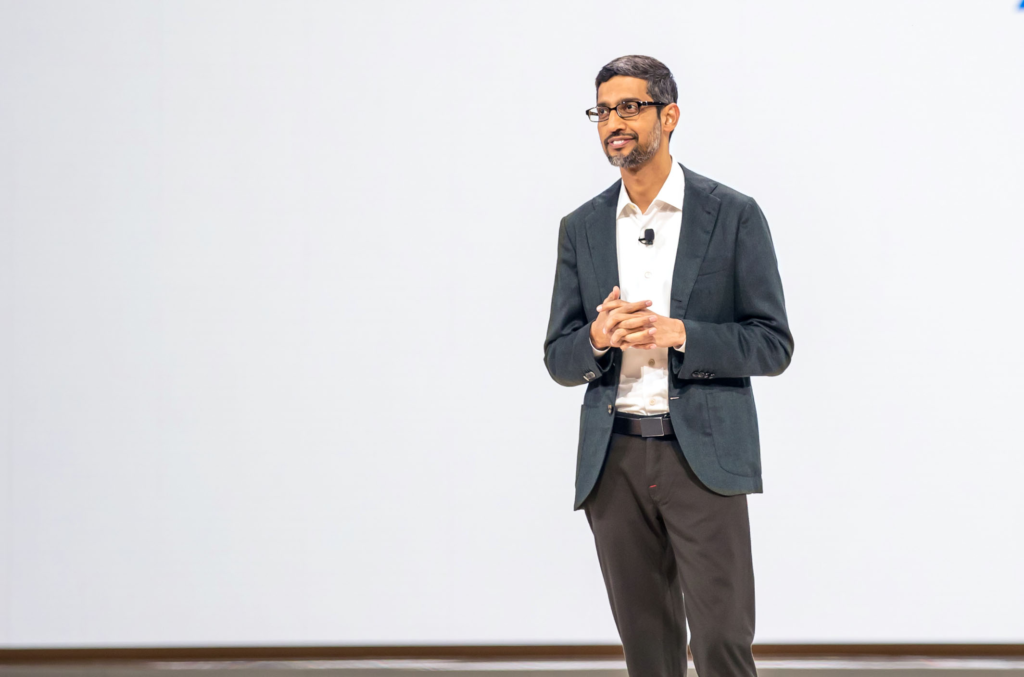
A $4 Trillion Moment for Alphabet
Alphabet became only the fourth company to cross the $4 trillion market value threshold, joining Nvidia, Microsoft, and Apple in an elite group that has come to define the current era of Big Tech dominance.
Alphabet’s Class A shares rose as much as 1.7% to a record high of $334.04 before easing slightly later in the session. Even after the pullback, the milestone underscored how dramatically perceptions around the company have shifted over the past year.
Just last year, faced growing skepticism over whether it was losing its early advantage in artificial intelligence. Today, that narrative has changed.
AI Strategy Rewrites the Story
At the center of this shift is Alphabet’s aggressive push around its Gemini platform. The company recently confirmed that the next generation of Apple’s AI models will rely on Google’s Gemini technology under a multi-year agreement — a development that placed firmly at the heart of the AI ecosystem powering consumer devices.
The momentum extends beyond Apple. Earlier reports indicated that Samsung Electronics plans to significantly expand the number of mobile devices equipped with AI features powered by Gemini this year, further strengthening Alphabet’s reach across hardware platforms.
These partnerships have played a key role in convincing investors that is no longer playing defense in AI — but actively shaping how it is deployed at scale.
Overtaking Apple and Rejoining the Front Rank
Last week, Alphabet surpassed Apple in market capitalization for the first time since 2019, becoming the world’s second most valuable publicly traded company. The move symbolized a broader reordering within Big Tech, as AI capabilities increasingly influence how companies are valued.
Alphabet’s shares are now up roughly 65% heading into 2025, outperforming most peers within the so-called “Magnificent Seven” group on Wall Street. The rally reflects confidence that the company’s AI investments are translating into tangible business growth rather than remaining experimental.
As one asset management executive put it, Alphabet has been the biggest surprise among Big Tech names over the past twelve months, advancing well beyond its traditional business model.
Google Cloud Emerges as a Growth Engine
A key driver behind Alphabet’s revaluation has been the transformation of Google Cloud. Once seen as an underperforming unit, Google Cloud has evolved into a central growth engine for the company’s AI ambitions.
In the third quarter, Google Cloud revenue surged 34%, while the total value of signed but unrecognized sales contracts climbed to $155 billion. That growth has been fueled in part by Alphabet’s decision to rent out internally developed AI chips to external customers — turning proprietary infrastructure into a commercial advantage.
This shift has helped reposition not just as an AI software leader, but as a full-stack provider spanning models, hardware, and cloud services.
Investor Confidence Returns
The renewed confidence in Alphabet’s strategy has also attracted high-profile institutional interest. Berkshire Hathaway, led by Warren Buffett, made a rare technology investment linked to Alphabet’s cloud and AI trajectory — a move widely seen as validation of the company’s long-term fundamentals.
Positive reception for the new Gemini 3 model has further strengthened Alphabet’s standing, particularly as competitors face pressure. The model’s reception increased scrutiny on OpenAI, following mixed reactions to its latest GPT release among some users.
Advertising Stability Adds Support
While AI and cloud growth have captured headlines, Alphabet’s core advertising business — still its primary revenue source — has remained broadly stable despite economic uncertainty and intense competition.
That stability has provided a financial foundation that allows to invest aggressively in AI without undermining profitability, reinforcing the perception that its transformation is sustainable rather than speculative.
Why This Matters
Alphabet’s brief rise to a $4 trillion valuation is more than a symbolic milestone. It reflects how artificial intelligence is reshaping the hierarchy of Big Tech, rewarding companies that can translate AI innovation into scalable platforms, partnerships, and revenue streams.
For Alphabet, the shift marks a decisive turn away from doubts about missed opportunities toward recognition as one of the central architects of the AI-driven economy.
Explore more coverage:
This story is part of Plus Reference’s Business coverage. You can follow all our Business news and analysis through the Business section, including our recent deep dive on AI-driven valuation shifts across Big Tech.
External references:
Company announcements and strategy updates referenced from Alphabet and Google official communications.